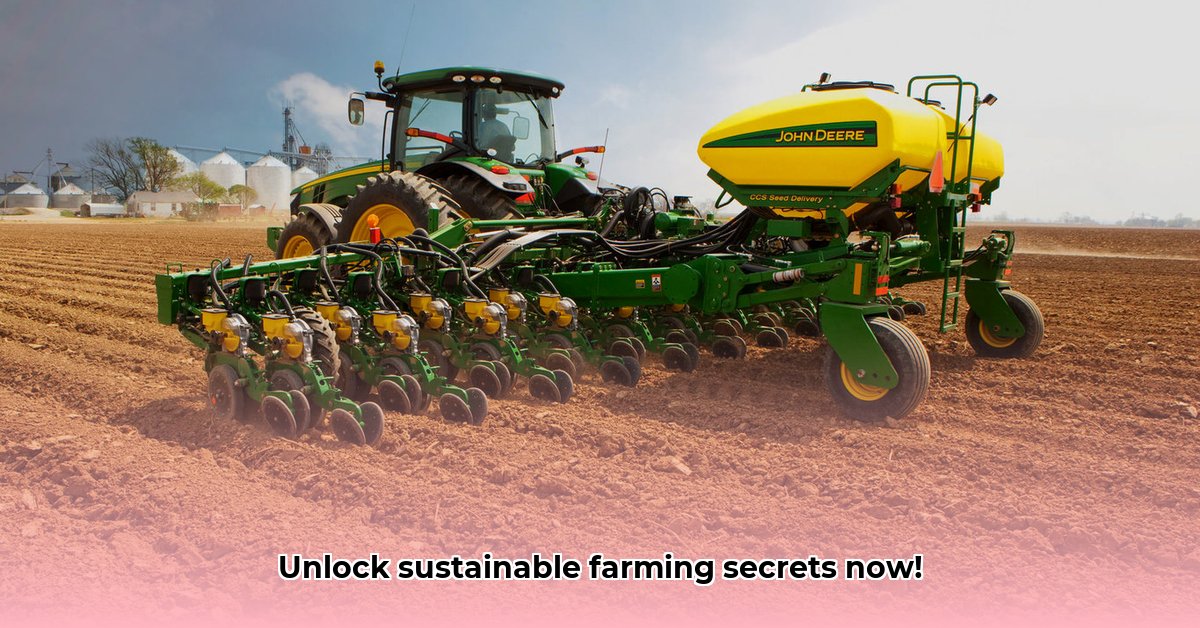
Tractor Planter Technology: A Revolution in Sustainable Agriculture
Tractor planters have evolved far beyond simple seed-dropping mechanisms. Modern planters, guided by GPS, sensors, and smart software, achieve pinpoint accuracy, significantly impacting both farm profitability and environmental sustainability. Farmers are achieving planting speeds of up to 15 acres per hour, but the real value lies in minimized resource waste and maximized yields. Isn't it remarkable how technology can transform traditional farming practices? This increased efficiency is pushing the boundaries of sustainable farming. For more on efficient spraying equipment, see tractor sprayers.
Sustainable Farming Practices: Doing More with Less
Precision planting isn't just about speed; it's about optimizing resource utilization. Accurate seed placement reduces seed requirements, saving farmers money and minimizing environmental impact. Smart spacing enables plants to absorb nutrients more efficiently, reducing fertilizer needs. This targeted approach also minimizes pesticide use, as evenly spaced, healthy plants are better equipped to resist pests and diseases. Some studies suggest that precision planting techniques, such as ExactEmerge™, can decrease pesticide use by up to 20%. This precision farming model is a crucial step towards sustainable agriculture.
Choosing the Right Tractor Planter: A Guide for Farmers
Selecting the ideal planter depends on several critical factors. Consider your farm's size – smaller farms might find entry-level models with GPS guidance sufficient, while larger operations may benefit from fully automated systems. The type of crop is also crucial; corn and soybean planters, for example, have distinct designs and functionalities.
Here's a breakdown of key considerations:
- Budget: Planters range significantly in price. Establish a realistic budget beforehand.
- Farm Size: Field size dictates required planter capacity and features.
- Crop Type: Different crops necessitate different planting requirements. Ensure planter compatibility.
- Technology Integration: Seamless integration with existing farm management systems is vital for data efficiency.
Addressing Challenges: Costs and Data Infrastructure
While the benefits are substantial, challenges remain. The initial investment in high-tech planters can be significant. However, government subsidies and financing options often alleviate this burden. Reliable internet and data infrastructure are also critical, especially in rural areas, for optimal data-driven decision-making. Experts predict that improved rural broadband will be essential for the widespread adoption of precision agriculture. What are the most effective strategies to overcome these hurdles and bring the benefits of precision agriculture to more farmers?
The Future of Precision Planting: Innovation and Automation
The future of tractor planters is characterized by increased automation, AI-driven decision-making, and enhanced integration with farm management tools. This will lead to further efficiency gains, optimized resource use, and a smaller environmental footprint. The overarching goal is to create farming methods that are both productive and environmentally responsible. Intelligent tractor planters are central to realizing this vision.
Actionable Steps: Implementing Precision Planting Technology
This guide provides actionable steps for various stakeholders:
| Stakeholder | Short-Term Actions | Long-Term Goals |
|---|---|---|
| Small-Scale Farmers | Explore affordable GPS-guided planters; consider used equipment. | Invest in modular systems; integrate data platforms for efficient analysis. |
| Large-Scale Farmers | Upgrade planters with advanced features; explore automation options. | Implement fully automated systems; invest in advanced data analytics. |
| Equipment Manufacturers | Focus on affordability and user-friendly designs; prioritize sustainability. | Develop sustainable, energy-efficient designs; incorporate AI and machine learning. |
| Governments/NGOs | Offer subsidies; support development of robust data infrastructure. | Promote research; provide educational resources on sustainable farming practices. |
Reducing the Environmental Impact: Optimizing Input Use
Farming is inherently resource-intensive. However, precision planting dramatically reduces water, fertilizer, and pesticide use without compromising yields. Imagine planting seeds only where they thrive, using precise amounts of resources. This targeted approach is the essence of sustainable agriculture.
Variable rate technology (VRT) enhances precision further. It adjusts planting density and input application based on real-time data, minimizing waste and environmental impact. This tailored approach translates to both environmental benefits and potentially higher profits.
Minimizing Environmental Impact Beyond Input Optimization
Beyond efficient resource use, precision planting mitigates soil erosion and water runoff. Optimized planting patterns improve soil structure, minimizing bare soil exposure and protecting water quality. This contributes to the long-term health of our soil and the planet. Further, targeted pesticide application reduces overall chemical use, minimizing environmental and human health impacts.
Overcoming Adoption Challenges: Collaboration and Resources
While the benefits are clear, widespread adoption faces obstacles. The initial investment can be substantial, particularly for smaller operations. This challenge is amplified in developing countries with limited infrastructure. Addressing this requires collaborative efforts from governments, NGOs, and technology providers to increase accessibility and affordability. Comprehensive training programs and support systems are essential to empower farmers to effectively use this technology.
A Path Toward Sustainable Agriculture: The Future of Precision Planting
The future of sustainable agriculture depends on continued innovation in precision planting. We need simpler, more affordable systems adaptable to diverse farming conditions and scales. Ongoing research focused on improving sensor technology, data analytics, and machine learning will further enhance precision planting capabilities. The full potential of precision agriculture will be achieved through collaborative knowledge and resource sharing. A collective commitment to bridging the gap between technological advancement and practical implementation is crucial for a sustainable agricultural future.